
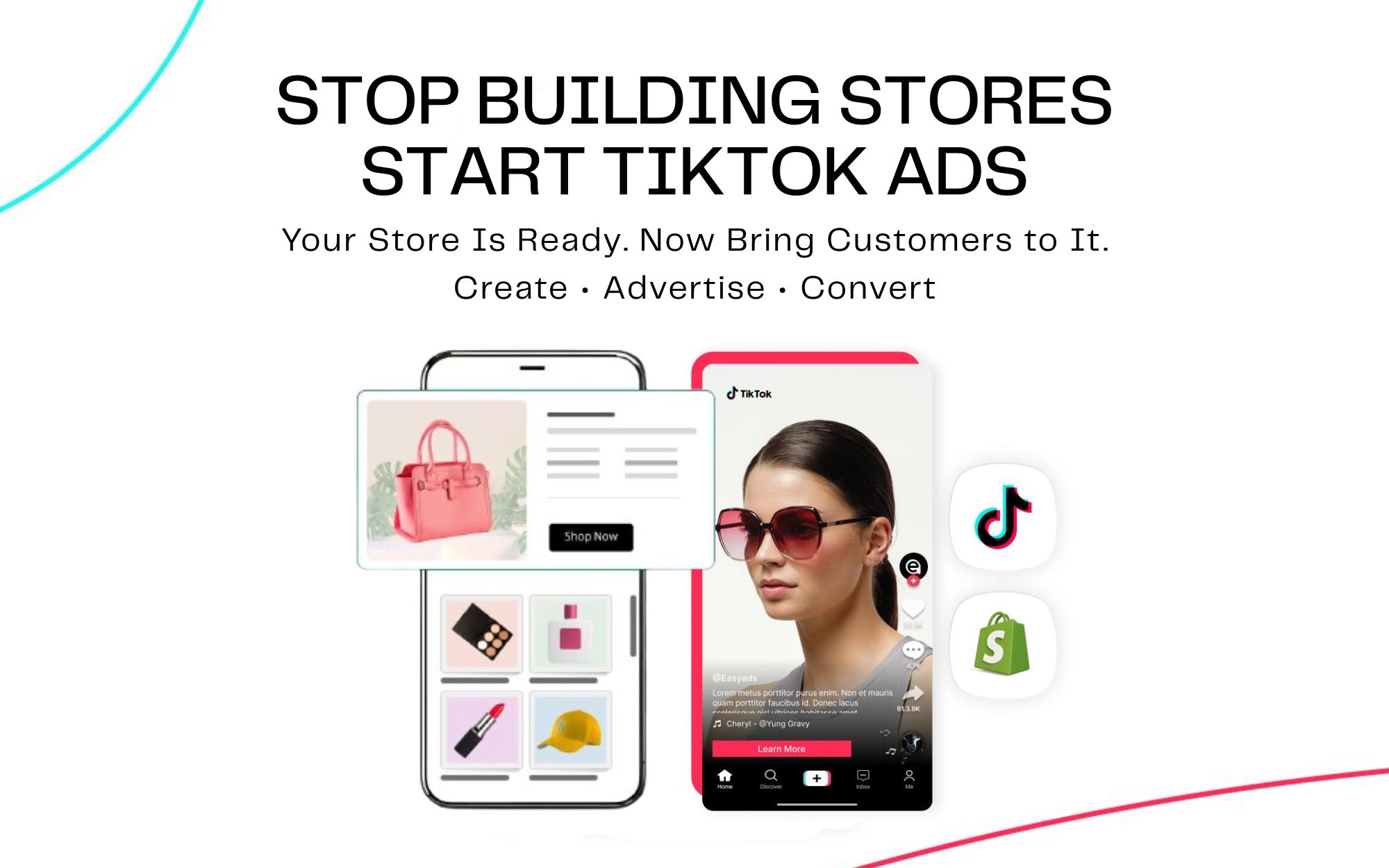
Stop Building Stores, Start TikTok Ads — How to Drive Traffic and Sales

Building an online store is an important step in starting an e-commerce business. But there is a common problem many businesses face: having a store doesn’t automatically bring customers.

You can spend weeks designing your website, improving product pages, and adding products, but if nobody sees your store, sales may remain low.

This is where marketing becomes critical.

Instead of constantly rebuilding your store, businesses should also focus on getting the right people to their products.

One powerful channel for this is TikTok advertising.

Your Store Is Only the Beginning

A professional Shopify store gives customers somewhere to buy your products.

But you still need a strategy for bringing potential customers there.

Think of the process like this:

TikTok Ad → Customer Interest → Product Page → Shopify Store → Purchase

Your store and your advertising strategy should work together.

Why TikTok?

TikTok has become a major platform for discovering content, products, and brands.

Its short-form video format allows businesses to demonstrate products in a way that can feel more natural and engaging than traditional advertising.

Instead of simply showing a product image, a brand can demonstrate:

  • How the product works
  • How it solves a problem
  • How it looks in real life
  • Different ways to use it
  • Customer reactions
  • Before-and-after results

This gives potential customers more context before they visit the store.

Don’t Just Advertise — Create Attention

A successful TikTok ad needs to capture attention quickly.

The first few seconds are particularly important. If viewers aren’t interested immediately, they may simply scroll to the next video.

Strong creative can start with:

  • A problem
  • A surprising result
  • A product demonstration
  • A question
  • A bold statement
  • A visually interesting moment

The goal is to make people want to keep watching.

Show the Product in Action

One of the advantages of TikTok is its video-first format.

Rather than creating an advertisement that feels like a traditional commercial, demonstrate the product naturally.

For example:

Problem → Product → Demonstration → Result → Call to Action

This simple structure can make an advertisement easier to understand.

Connect TikTok Ads to Your Shopify Store

The advertising journey should be consistent.

If a customer sees a product in a TikTok ad, clicking through should take them to a product page that matches what they saw.

The product page should provide:

  • Clear images
  • Strong product information
  • Price
  • Benefits
  • Variants
  • Shipping information
  • A clear purchase option

A great ad can generate interest, but a poor landing page can still lose the sale.

Test Instead of Guessing

One of the biggest advantages of digital advertising is the ability to test different approaches.

Businesses can experiment with:

  • Different videos
  • Different hooks
  • Different audiences
  • Different offers
  • Different product angles
  • Different calls to action

Instead of assuming which advertisement will work best, let performance data guide decisions.

Don’t Keep Rebuilding the Store

Store design is important, but there comes a point where businesses need to shift their attention.

If your store is functional, professional, mobile-friendly, and easy to use, the next question should be:

How do we get more qualified people to visit it?

That is where marketing and advertising become essential.

Turn Attention Into Sales

TikTok can help businesses generate awareness and product interest, but the entire customer journey matters.

A successful strategy connects:

Creative Content + TikTok Ads + Product Page + Shopify Store + Conversion

Every part should support the next.

Final Thoughts

Building a Shopify store is only one part of building an e-commerce business.

Once the store is ready, businesses need to focus on attracting potential customers and turning attention into measurable results.

TikTok advertising can provide a powerful way to showcase products, reach new audiences, and drive traffic toward an online store.

At Ecom Cadre, the focus isn’t just on building stores. It’s about helping e-commerce businesses think beyond the storefront and focus on the complete customer journey — from discovering a product to making a purchase.
E-commerce Platform Development — Building a Scalable Online Store

Launching an online business requires more than simply adding products to a website. Businesses need an e-commerce platform that can handle products, customers, orders, payments, inventory, and growth.

As an online store grows, its requirements often become more complex. A platform that works for a small business may not provide everything needed when traffic, products, and customers increase.

This is where professional e-commerce platform development becomes important.

What Is E-commerce Platform Development?

E-commerce platform development involves creating and customizing the technology that powers an online store.

Depending on the business, this can include:

  • Storefront development
  • Product catalog management
  • Shopping cart functionality
  • Payment integration
  • Customer accounts
  • Order management
  • Inventory systems
  • Search and filtering
  • Analytics
  • Third-party integrations

The objective is to create an online shopping environment that works efficiently for both customers and the business.

Why Businesses Need a Strong E-commerce Platform

Your e-commerce platform is the foundation of your online operation.

A strong platform can make it easier to manage products, process orders, communicate with customers, and monitor business performance.

It should also be able to adapt as the business grows.

For example, a store might start with 50 products and a few hundred visitors per month. Over time, it could grow to thousands of products and significantly higher traffic.

The platform needs to be prepared for that growth.

Focus on User Experience

Customers expect online shopping to be simple.

They should be able to:

  1. Find a product
  2. Understand its features
  3. Add it to their cart
  4. Choose a payment method
  5. Complete their order

Complicated navigation or confusing checkout processes can cause customers to leave before completing their purchases.

Good e-commerce development therefore puts the customer experience at the center.

Build With Scalability in Mind

Scalability means designing a platform that can handle future growth.

Instead of building only for today’s requirements, businesses should consider what they may need in the future.

This could include:

  • More products
  • More customers
  • Higher traffic
  • Multiple payment methods
  • Additional sales channels
  • Advanced analytics
  • Third-party software integrations

Planning for these requirements early can prevent expensive problems later.

Security Is a Priority

E-commerce platforms handle important customer and business information. Security should therefore be part of the development process from the beginning.

Businesses should consider secure payment processing, appropriate access controls, reliable hosting infrastructure, regular updates, and protection against common online threats.

Customers are more likely to trust a store when the entire purchasing experience feels secure and professional.

Integrations Can Improve Efficiency

Modern e-commerce businesses often use several different tools.

An online store may need to connect with:

  • Payment gateways
  • Shipping providers
  • Accounting software
  • Customer relationship management systems
  • Marketing platforms
  • Inventory management tools
  • Analytics platforms

Proper integrations can reduce manual work and allow different systems to communicate with each other.

Performance Matters

A platform that is slow or unreliable can damage the customer experience.

Development should consider performance from the beginning. Efficient code, optimized images, appropriate infrastructure, and sensible use of third-party tools can help maintain a responsive store.

Choose the Right Development Approach

There is no single e-commerce solution that works for every business.

Some businesses may benefit from a hosted platform such as Shopify, while others may require a more customized solution.

The right choice depends on factors such as:

  • Business size
  • Product range
  • Budget
  • Required functionality
  • Expected growth
  • Integrations
  • Customer requirements

The important thing is to choose a platform based on the business’s actual needs rather than simply following trends.

Final Thoughts

A successful e-commerce platform should be designed around more than today’s requirements. It should provide a reliable foundation for future growth.

At Ecom Cadre, e-commerce development focuses on creating platforms that are practical, user-friendly, scalable, and aligned with business goals.

When the technology behind an online store is built properly, businesses can spend less time dealing with technical limitations and more time focusing on customers and growth.